
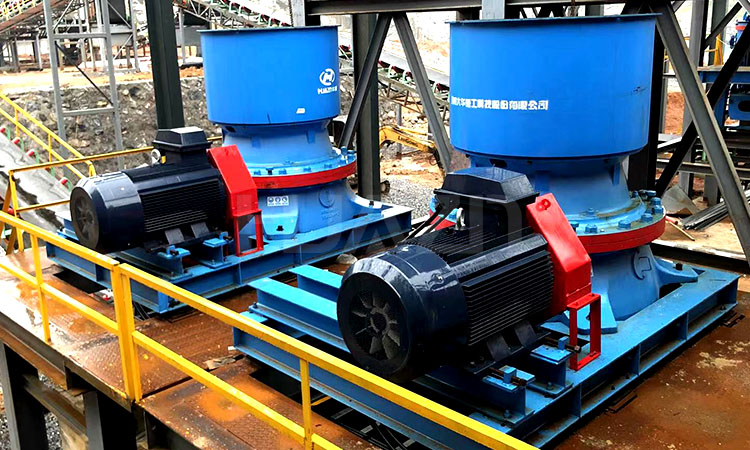
A cone crusher is an important piece of equipment in many mining, quarrying, and aggregate crushing plants. It is commonly used for secondary, tertiary, and fine crushing. However, a cone crusher may not always reach its expected capacity. High wear, unstable feeding, incorrect settings, and poor maintenance can reduce production and increase operating costs. So, how can you improve cone crusher capacity while keeping operating costs under control?

Here are several practical methods.
1. Keep the Feed Stable
The crusher should receive a continuous and evenly distributed flow of material. Too little feed can reduce crushing efficiency, while excessive feed can overload the machine. A suitable feeder can help control the feed rate and maintain stable production.
2. Control the Feed Size
The feed material should be within the recommended size range of the cone crusher. If the feed contains too much oversized material, the crusher may experience higher load and lower efficiency. Proper upstream crushing and screening can help control the feed size.
3. Choose the Right Crushing Chamber
Different crushing applications require different chamber designs. The correct chamber should be selected according to the feed material, feed size, and required product size. Using the right chamber can help improve:
* Crushing efficiency
* Product shape
* Capacity
* Wear part life
* Energy efficiency

4. Set the Correct Closed-Side Setting
The crusher setting has a direct effect on the final product size and capacity.
A smaller setting can produce finer material, but it may also increase the crushing load and reduce capacity.
A larger setting may increase capacity, but the product may become too coarse for the next stage.
Operators should adjust the crusher according to actual production requirements rather than simply using the smallest possible setting.
5. Use the Right Cone Crusher Wear Parts
Wear parts gradually change the shape of the crushing chamber during operation. When the mantle and concave become heavily worn, crushing performance can decrease. Regular inspection and timely replacement of wear parts can help maintain stable performance.
6. Maintain the Crusher Regularly
Regular maintenance is one of the simplest ways to reduce unexpected downtime. Operators should regularly check:
* Lubrication system
* Hydraulic system
* Bearings
* Drive components
* Wear parts
* Bolts and connections
* Safety devices
The lubrication system deserves particular attention. Insufficient or contaminated lubrication can increase friction, temperature, and component wear.

How to Reduce Cone Crusher Operating Costs
Improving capacity and reducing operating costs of cone crusher usually go together. A crusher that produces more finished material with less downtime can reduce the cost per ton.
Use suitable wear parts: Reduce unnecessary liner replacement and maintain stable crushing performance.
Maintain stable feeding: Avoid overloads and improve crushing efficiency.
Keep the lubrication system clean: Proper lubrication can help reduce component wear.
Monitor wear regularly: Replace parts before severe wear causes secondary damage.
Optimize the whole crushing plant: The feeder, crusher, screen, conveyor, and other equipment should work together.

If you are planning a new crushing plant or want to improve the performance of an existing cone crusher, selecting the right equipment and optimizing the complete crushing process can help achieve higher production and lower cost per ton.
Luoyang Dahua provides cone crushers, crushing equipment, and complete crushing plant solutions for mining, quarrying, and aggregate applications. For more information about cone crushers and crushing plant solutions:
Website: www.lydhchina.com
WhatsApp: +86 13938852499